UBI: More than Meets the Eye


I. Introduction
The recent astronomical growth in AI’s capabilities has raised several new questions about labor. The most advanced models can review high-level mathematics papers, write sophisticated algorithms, and generate extensive written content in seconds. Progress is advancing so rapidly that industry‑leading LLMs from just one year ago are now considered obsolete. At this pace, the possibility of AI replacing a sizable portion of the workforce within the decade is undeniable, raising concerns that compensation will shift from laborers to owners. These features of the current economic landscape prompt the question of how income can be redistributed through a universal basic income (UBI) and whether it can serve as a sufficient counterbalance.
At first glance, foundational economic principles suggest that a UBI would decrease individuals’ willingness to work, potentially slowing economic growth. The trade‑off between labor and leisure significantly influences long‑term decisions such as retirement timing and the prioritization of work‑life balance over longer hours. As a result, the marginal utility of each additional dollar earned after receiving a UBI may fall below the threshold at which individuals prioritize labor over leisure, potentially reducing working hours. If aggregate working hours decline, innovation and economic growth may also suffer. Consequently, much of the debate surrounding UBI focuses on the potential consequences of a labor force that no longer wants to labor, with repercussions ranging from industry‑wide shutdowns to an inability to meet fundamental societal needs.
However, empirical data on UBI’s micro‑ and macroeconomic effects show that there is more than meets the eye. When deployed strategically, UBI is highly unlikely to produce such devastating outcomes. It can be an effective method of income redistribution, and in the following sections, we analyze its impact on long‑term economic growth, innovation, and social issues.
II. Long-Term Growth
The growth of the AI market is projected to be rapid in the coming years, with estimates for the global market size having been $129 billion in 2022 and surpassing $2.7 trillion by 2033 (Bonaparte, 2023). Additionally, with major leaders in the AI industry such as Nvidia, which has seen astronomical revenue growth, and Meta, which aims to spend $600 billion on data centers and infrastructure by 2028, there is no question about the enormous effect AI will have on the global economy. Firms are investing as aggressively as possible into AI, and with the trillions of dollars pouring in, the capabilities of AI are expected to rise immensely. In Figure 1 below, the growth of AI’s intellect is graphed as a function of time and compute.

Figure 1. Intellectual Development of AI as a Function of Time and Compute. Reproduced from Aschenbrenner, L. (2024, June)
In particularly analytical and quantitative tasks, top AI models have noticeably surpassed the average human in efficiency and, in some cases, quality. Although AI may lack interpersonal skills and many other qualitative aspects of human roles, the sheer productivity gains may be compelling enough to financially justify mass layoffs in sectors where AI can contribute. Ten-person engineering teams may be shaved down to three who can expertly use AI as a collaborator, and the remaining seven will find themselves jobless in a now-filled gap in the market, with skills they worked for years to gain suddenly attached to far less value than before.
Given the severe economic consequences for individual laborers if this scenario were to occur, implementing a UBI is a worthy consideration. What happens, however, if detaching income from labor begins to discourage workers from productivity whatsoever? The Alaska Permanent
Fund, a fund providing yearly cash dividends to all Alaskan residents, acts as a large-scale case study for this affair. Comparing employment trends before and after the fund was introduced in 1982, it was found that adverse labor market effects were limited and aggregate employment was not significantly reduced with unconditional income being paid out, compared to synthetic control states. Additionally, the results supported the hypothesis that there is a derived demand from a UBI: as unconditional income is paid out, consumption increases due to recipients’ newfound purchasing ability and leads to an increase in labor demand to produce the goods and services preferred by the recipients (Jones & Marinescu, 2022).
Ultimately, the economic impact of a UBI on long-term growth is not black-and-white. In practice, the results observed differ from theoretical hypotheses and support a UBI as a viable tool for income security. Considering the labor repercussions that AI poses, financial gains being highly concentrated in capital owners and disproportionately lower gains being dispersed among laborers are strong catalysts for income redistribution.
III. Innovation
The benefits of a UBI on innovation and providing economic opportunities are considerable. Individuals at the lower end of the wage distribution will likely derive greater utility from income redistribution, as much of their income may go towards essential goods rather than non-essentials. As a result, very little, if any, of their income from work can be set aside for savings, much less for taking career risks that can drive innovation and useful disruption in an economy, such as starting a business.
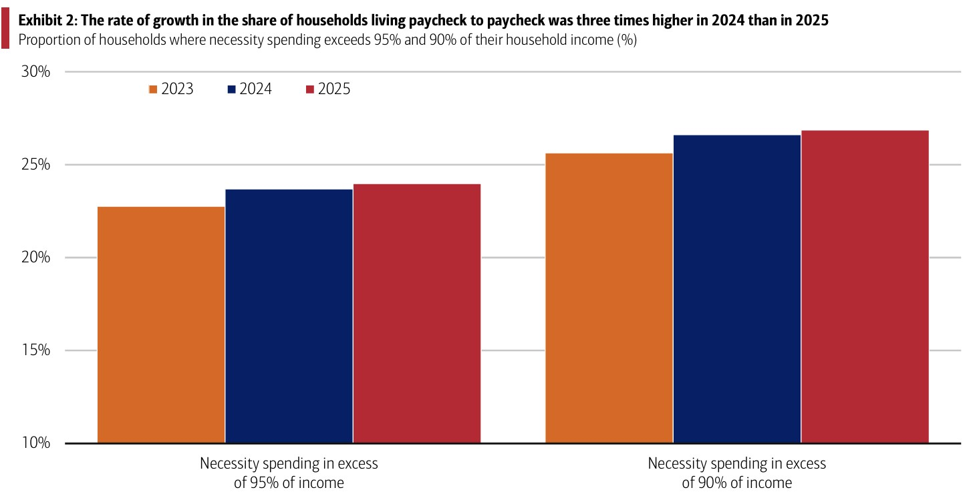
Figure 2. Distribution of American Spending on Necessities.
Reproduced from Bank of America Institute (2025, November)
In addition, the proportion of Americans living paycheck-to-paycheck in this manner is far from small. In Figure 2 above, as of 2025, roughly 24% of households spend 95% of their income on necessities, with that number rising to 27% when the threshold drops to 90%. Considering that living “paycheck-to-paycheck” is defined as necessity spending in excess of 95% of household income, in an American population of approximately 350 million individuals, tens of millions of households and individuals make economic choices in a paycheck-to-paycheck state. Under such conditions, the potential for innovation and risk-taking is low. Meanwhile, innovation is essential for rejuvenating an economy by disrupting and preventing monopolies, increasing the quality of goods and services, improving the lives of those who partake of them, and creating new jobs for workers, to name merely a few benefits (Snyder, 2019). The introduction of a UBI could massively reduce this percentage and allow millions a financial foothold to elevate from paycheck-to-paycheck conditions, take marginally greater risks, and have greater possibilities for innovating in their careers.
IV. Social Cohesion
AI’s impacts on social issues are varied, but for particular concerns such as wealth inequality, they are projected to be detrimental. When it comes to wealth distribution, the adoption of AI technology and capital stock was found to have a positive and statistically significant correlation with wealth disparity (Skare et al., 2024). Furthermore, as economic inequality rises, so does political and social instability (Blanchet & Martínez-Toledano, 2022). With the wealth gap expanding under the influence of AI, a UBI can aid in ameliorating the negative repercussions and building a greater sense of societal equality among individuals.
Additionally, a UBI’s benefits in stabilizing communities involving substance abuse have been immense. Substance abuse and poverty often go hand-in-hand and lead to an extreme deterioration of a person’s well-being, leading to a challenging cycle for individuals to break out of without support. It was found that in Canadian communities experiencing such conditions, the financial support of a UBI was found to improve the mental wellness of recovering individuals, in turn leading to reduced substance use and lower likelihood of chronic health conditions (Gibson, 2024). By reducing the likelihood and frequency of persistent health conditions, national healthcare spending will decrease, further incentivizing the implementation of a UBI.
V. Discussion & Conclusion
Overall, the evidence suggests that a UBI can meaningfully alleviate the economic downsides of technological inequality, though its design requires careful consideration. The potential benefits of a UBI are substantial, but the financial cost would be immense. With 350 million citizens in the US, any large‑scale UBI proposal would cost well over a trillion dollars annually, even for a modest program. Funding such a system may require raising certain taxes, which would have their own repercussions, or reducing the scale of the UBI itself. One viable approach is to prioritize working‑age individuals in the lowest income quintile, who would experience the greatest marginal benefit. Alternatively, a tiered system of unconditional payments could differentiate income classes while preserving the simplicity that makes UBI effective.
In conclusion, while a UBI may appear economically unsound at first glance, the empirical evidence paints a more nuanced picture. When implemented strategically, a UBI can support long‑term economic stability, foster innovation, and strengthen social cohesion. There is, indeed, more than meets the eye.
References
● Bonaparte, Y. (2023). Artificial Intelligence in Finance: Valuations and Opportunities. Finance Research Letters, 60, 104851. https://doi.org/10.1016/j.frl.2023.104851
● Aschenbrenner, L. (2024). Situational Awareness: The Decade Ahead.
● Jones, D., & Marinescu, I. (2022). The Labor Market Impacts of Universal and Permanent Cash Transfers: Evidence from the Alaska Permanent Fund. American Economic Journal: Economic Policy, 14(2), 315–340.
● Bank of America Institute. (2025). Paycheck to paycheck: Slowing but growing.
● Snyder, B. (2019). How innovation drives economic growth. Stanford Graduate School of Business.
● Skare, M., Gavurova, B., & Blažević Burić, S. (2024). Artificial intelligence and wealth inequality: A comprehensive empirical exploration of socioeconomic implications. Technology in Society, 79, 102719. https://doi.org/10.1016/j.techsoc.2024.102719
● Blanchet, T., & Martínez-Toledano, C. (2022). Wealth Inequality Dynamics in Europe and the United States: Understanding the Determinants. Journal of Monetary Economics, 133.
● Gibson, M. (2024). Putting the capital in recovery capital: An exploration of universal basic income and the impacts for people who use drugs in Canada. International Journal of Drug Policy, 133, 104574. https://doi.org/10.1016/j.drugpo.2024.104574


